Eleven passengers, two cabins, one bathroom. The information on a stat sheet seems easy to understand, until you try to imagine how your group will spend their day on board. Is there room to eat together? Do the cabins allow overnight stays? Is paddle surfing included or do you have to request it separately?
To read a ship's data sheet, it is helpful to distinguish three things: how many people it accommodates, how its spaces are distributed, and what the package you're booking includes.The photographs and equipment list help you choose; the conditions for your date should supplement that information before booking.
Day passengers and sleeping berths: two different pieces of data
The abbreviation "Pax" is used to indicate people or passengers. If the information sheet also lists the crew in a separate field, read both figures and confirm how many passengers the departure you're interested in can accommodate. Don't deduce the passenger capacity from a single number.
Daytime capacity is not the same as overnight capacity. Pershing 72 spec sheetFor example, it indicates 10 people during the day and overnight accommodation for 6, distributed in three en-suite cabins. These are two different uses of the same boat.
The number of cabins alone doesn't tell you how many people can sleep on board. You need to know the number of beds, their layout, and the number of available guest spaces. Furthermore, the fact that a vessel has cabins doesn't guarantee overnight stays on your dates.
If you plan to stay overnight, look for a specific overnight capacity and check the rental options. For a day trip, focus first on passenger capacity and the spaces you'll be using during the day.
Length explains size; layout, how one lives on board
The length is the length of the boat. The beam, when shown, indicates its width. These are useful measurements, but they don't explain on their own how much space each person will have or where you can gather.
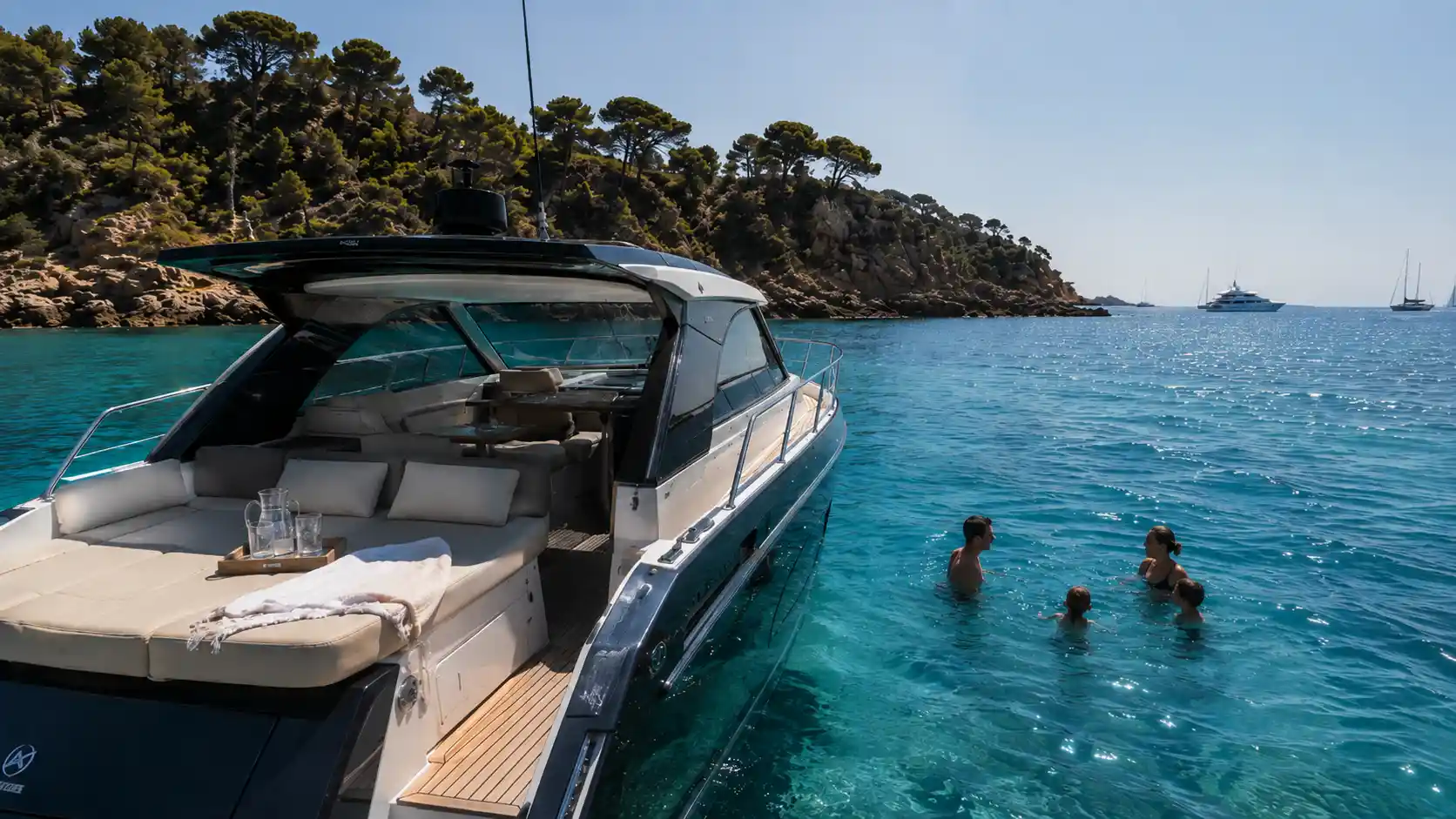
A capacity figure doesn't mean that all spaces can accommodate the entire group at once. Daytona 50 It lists a capacity of 11 passengers, while its description mentions a table for six. If eating together is an important part of the plan, that detail warrants a specific inquiry about the available seating.
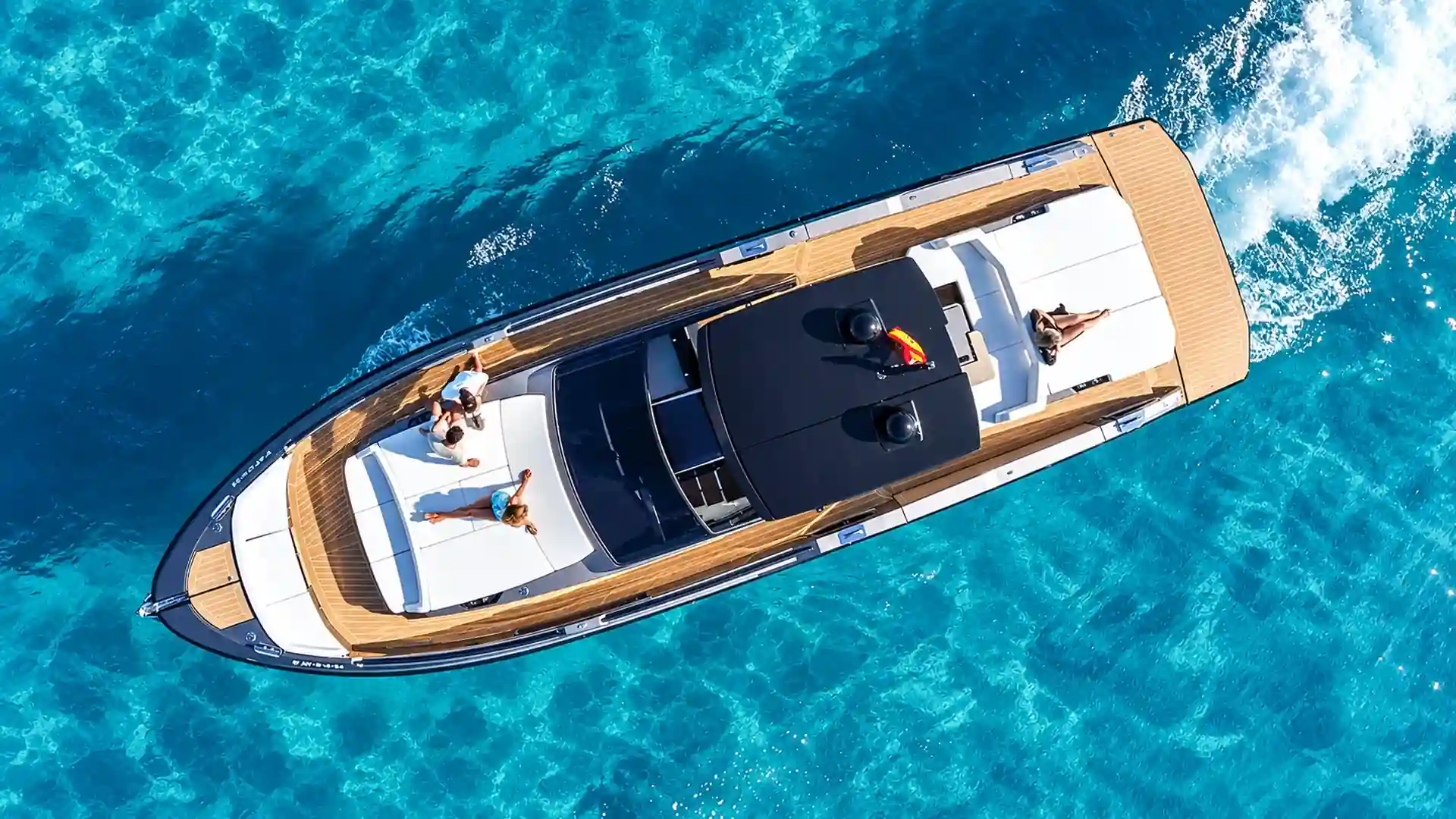
When reviewing the gallery, pay attention to issues that affect daily use:
- Where the seats are and how the group is divided among the outdoor areas.
- Which part of the roof is shaded and does it cover the areas where you want to sit or eat?
- How to access the toilet and if there are steps or narrow passages.
- What is the route from the rest area to the bathing platform?
The photos show spaces from specific angles and with a particular configuration. A platform deployed while anchored, for example, doesn't necessarily depict the space available while underway. If access or a layout is crucial for someone in the group, request current photos or an explanation from the team.
Boat equipment and services included in the rental
"Kitchen," "air conditioning," "refrigerator," or "sound system" describe facilities. They don't automatically specify how they can be used during your trip or what services accompany them.
A fully equipped galley doesn't necessarily mean there's a cook or that food is included. A refrigerator doesn't tell you what drinks are inside. And the presence of air conditioning raises another question if you need to use the interior while at anchor: which areas does it cool and under what conditions will it be available?
It distinguishes between what is installed, what is included, and what is optional. On the Daytona 50, the information sheet lists paddle surfing and the Seabob as optional. If either is part of your plan, we will need to confirm availability, cost, and terms of use for that booking.
Icons are helpful for identifying amenities, but it's also important to read the accompanying text. The fact that a water activity is listed doesn't mean there's enough equipment for all passengers at once, nor that it can be used at every stop.
Cabins, bathrooms and crew: what you should specify
On a day trip, the interior features can matter even if no one is sleeping. A toilet, a changing area, or a relaxation zone can be more important in the choice than a difference in size between boats.
Check what facilities will be available to guests. If the listing mentions "en suite" cabins, it refers to the bathrooms; it doesn't provide all the details about access, size, or use during the charter.
The crew is often listed as a number. This number doesn't describe all their responsibilities. If you need assistance during meals, specific support when boarding, or any other additional service, ask who provides it and whether it's included in the charter agreement. Don't assume that each vessel offers services that aren't listed on its description.
Port, duration and consumption: data that needs context
The published location is for arrival planning purposes, but before booking you need the port and meeting point for that departure. Don't assume that all boats in the fleet embark at the same place.
Something similar applies to the duration. "Price per day" requires a start and end time. Confirm the booked time slot before making any further travel or plans.
If fuel consumption is shown in liters per hour, consider it a figure that requires context. Simply multiplying it by the total charter hours won't give you the daily fuel cost: that time may include navigation and stops. Request an estimate for the planned route and an explanation of how the final cost will be calculated.
Engine power or a published speed does not guarantee an arrival time. The route is adjusted to the conditions and the skipper's decisions; the information sheet does not replace planning your departure.
What should be clear before confirming
Once you understand the ship, the booking proposal should address the points left open in the information sheet. You can use this list to review the team's response:
| Data from the record | Confirmation for your booking |
|---|---|
| Passengers and cabins | Passengers admitted and, if applicable, overnight accommodation |
| Gallery and distribution | Adequate seating, shade, table and access for the group |
| Equipment and icons | What's included, what's optional, and what needs to be requested |
| Crew | People and services planned for departure |
| Location and price per day | Boarding point, date and contracted time |
| Rate and consumption | Detailed taxes, fuel and extras |
Frequently asked questions about Luxury Dreams Ibiza They offer a general overview of the procedures. For your departure, please check the specific conditions for the vessel, including payment, changes, and cancellations.
If something important is missing, turn it into a specific question. "Can all eight of us sit and eat together in the shade?" provides more information than "Is the boat comfortable?" The information sheet will have served its purpose when you can relate its details to what your group needs on board.