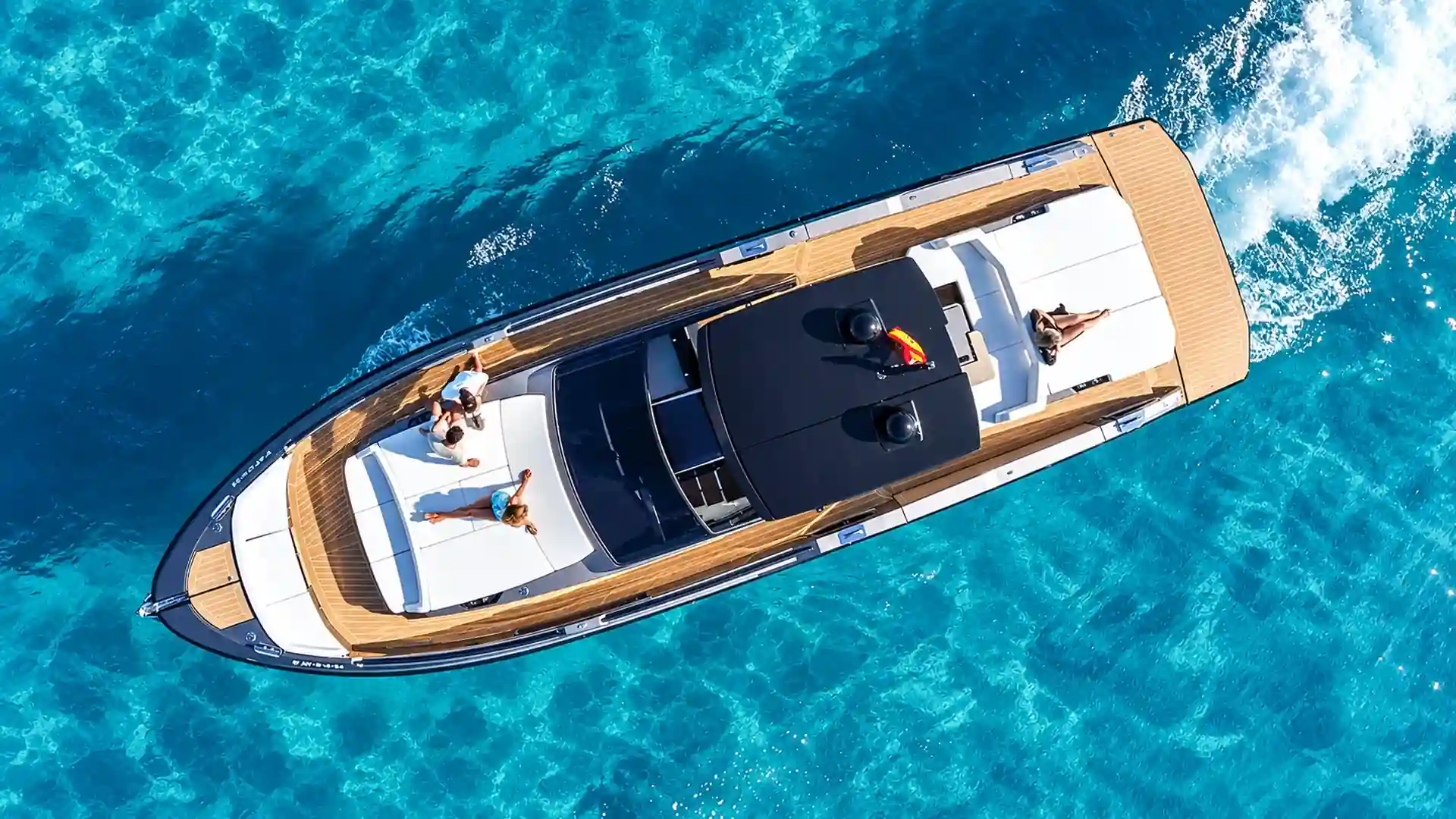
The Mediterranean summer is part of the experience of sailing around Ibiza, but there are days when the temperature ceases to be merely pleasant and begins to seriously affect life on board. With little wind, a deck exposed to the sun, and several hours away from consistent shade, the perceived temperature can be much more challenging than the thermometer suggests.
Sailing in extreme heat in Ibiza It requires modifying some common habits. It's not just about drinking more water or using sunscreen. The heat affects fatigue, attention, tolerance to seasickness, hydration, and even how you plan a voyage or stay at anchor.
At sea, there is also a false sense of security. The breeze can make the body perceive less heat, while solar radiation continues to act for hours. The reflection off the water adds to the exposure, and certain areas of a vessel, especially decks, sunbathing areas, and exposed surfaces, accumulate considerable heat.
Managing these conditions well allows you to preserve something fundamental in navigation: clarity of mind.
The heat at sea is not perceived the same way as on land
A moving vessel generates apparent airflow. This airflow cools the skin and can make the temperature seem more bearable than it actually is. The problem arises when this sensation reduces the perception of thirst, delays the search for shade, or leads to staying in the sun for too long.
In a sheltered cove, almost the opposite happens. When ventilation disappears, especially in areas protected by cliffs, the deck can become a very hot space.
On the coast of IbizaThe orientation of each cove matters. Some anchorages remain open to the breeze, while others are practically enclosed between rock walls. Two locations separated by only a few miles can offer very different thermal conditions.
The heat doesn't only affect those lying in the sun. A person piloting a vessel may spend a lot of time in a fixed position, continuously exposed to the heat, and it is precisely those who sail who need to maintain greater concentration.
Therefore, thermal management should be understood as part of navigation, not just as a matter of comfort.
Hydration should begin before you feel thirsty
Waiting until you're extremely thirsty to drink is usually less effective than maintaining gradual hydration throughout the day. On hot days, getting into the habit of drinking small amounts frequently helps avoid long periods without fluids.
La hydration on board This is especially important because conversations, baths, travel and navigation make it surprisingly easy to forget to drink for several hours.
The body also loses mineral salts through sweat. A balanced diet, fruit, and light meals help supplement water intake when exposure is prolonged.
Alcohol deserves separate consideration. Intense heat, dehydration, and reduced attention span create an undesirable combination in any nautical environment, especially for the person at the helm.
The shade is also part of security
On a boat, shade should not be considered solely as a comfort element.
A bimini top, a hardtop, or any structure that provides protection from direct sunlight can completely change how hot a day is. Alternating periods of sun exposure with time in the shade reduces the accumulated heat load over several hours.
There is also an important difference between being in the shade and being in an enclosed space. An unventilated interior can reach very high temperatures. When sailing conditions allow, air circulation is almost as important as avoiding direct sunlight.
On anchored vessels, even slight changes in wind direction significantly alter deck ventilation. Perfect shade with no airflow can be more uncomfortable than a partially sheltered area with a constant breeze.
Sun protection beyond cream
La Sun protection on a boat It works best when applied in layers. Sunscreen is important, but it shouldn't be the only barrier during prolonged sun exposure.
Hats that stay securely fastened, appropriate sunglasses, and lightweight clothing that covers shoulders, back, or arms help reduce the amount of radiation that directly reaches the skin.
At sea, surface reflection also plays a role. Radiation doesn't only come from above, and certain areas of the face or body can remain exposed even with partial protection.
It's easy to forget to reapply sunscreen after showering. Water, drying, and sweat affect how long it stays on the skin. Ears, insteps, back of the neck, and scalp are some of the areas most easily forgotten.
Midday hours change the pace of navigation
When the heat is particularly intense, not all hours should be used in the same way.
The early hours are usually warmer. They also allow for travel before the sun reaches its peak intensity and make for more comfortable sailing for those who will be spending many hours at sea.
During the most demanding hours, spending long periods exposed on the roof provides little benefit when shade and ventilation alternatives exist.
The Mediterranean rhythm makes a lot of sense when applied to the sea: more activity when conditions are mild and a more relaxed attitude when the sun dominates.
This is especially noticeable during a crossing between Ibiza and Formenterawhere certain sections offer little natural protection from the sun. The speed of the boat itself can create a feeling of coolness that masks accumulated fatigue.
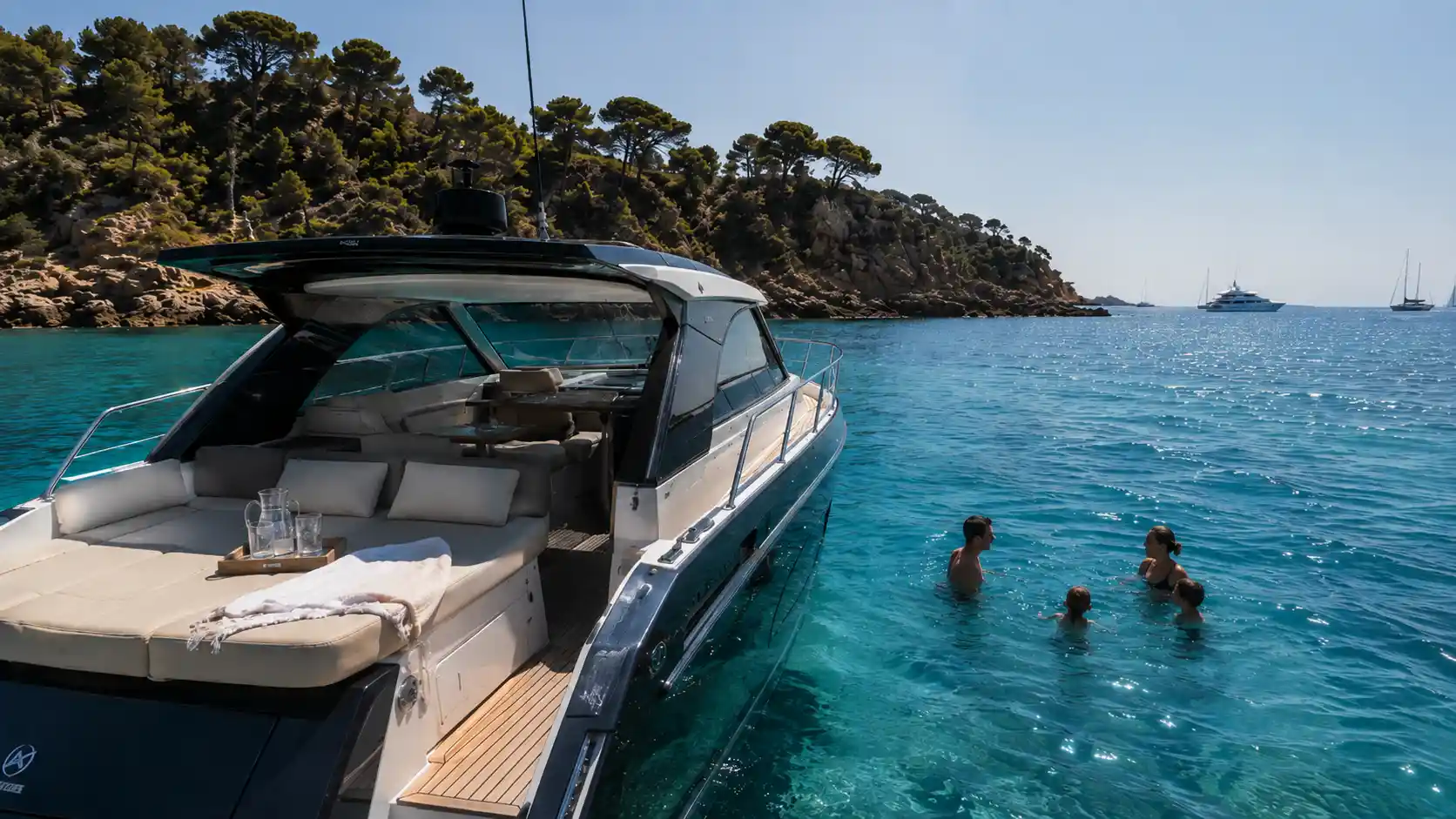
Second suggested image: boat anchored in the waters of Ibiza or Formentera with awning deployed and a clearly visible shaded area.
Anchoring properly also helps combat the heat
The choice of where to stop matters more than it seems. A cove completely sheltered from the wind might offer very calm waters but also a high temperature. A slightly more open cove can provide much more pleasant natural ventilation.
Before anchoring, it's advisable to observe the actual wind direction within the cove, not just the direction offshore. Cliffs deflect air currents and can create calm areas or slight localized gusts.
From a technical point of view, it is also important to check how the anchoring Once the vessel is positioned, changes in wind can alter its orientation and, consequently, the position of the shadow on deck.
A small rotation can sometimes completely transform a sheltered area. Those who spend many hours at anchor end up learning to observe the sun's path almost as attentively as the wind's direction.
Be careful with hot covers and surfaces
There are elements on a boat that accumulate a considerable amount of heat. Dark surfaces, metal handrails, fittings, cushions, and certain areas of the deck can reach uncomfortable temperatures after several hours of exposure.
Walking barefoot is part of life on board, but it is advisable to check the temperature of surfaces that have been exposed to direct sunlight for a long time, especially when traveling with children or people with sensitive skin.
Electronics also deserve attention. Phones, cameras, tablets, and other devices can overheat if left in direct sunlight. A well-ventilated, sheltered spot is usually preferable to placing them on a hot surface.
The heat also affects the ability to navigate
This is probably one of the less obvious aspects. Excessive heat causes fatigue, and fatigue can reduce the ability to maintain constant attention, anticipate the movements of other vessels, or make quick decisions.
During coastal navigation around Ibiza, small tasks are continuously performed: monitoring the sounder, controlling maritime traffic, checking distances, observing bathers, interpreting wind changes, or approaching an anchorage.
None of them are particularly complex on their own. The problem arises when they accumulate over several hours while the body is tired or dehydrated.
That's why those in government need to pay special attention to shade, ventilation, rest, and regular fluid intake.
Recognize the early signs of overheating
Headache, dizziness, weakness, nausea, cramps, heavy sweating, or an unusual feeling of exhaustion may indicate that exposure is excessive.
If you experience symptoms consistent with heat exhaustion, it is advisable to leave direct exposure, seek a cool and ventilated place, gradually cool the body, and assess the situation carefully.
Un heat stroke while sailing This is a potentially serious situation. Confusion, disorientation, behavioral changes, loss of consciousness, or other severe symptoms require urgent assistance.
At sea, there is an added risk: a person who is seasick, weak, or disoriented is very close to the water. Even with the boat anchored, this situation requires extra vigilance.
Bathing is refreshing, but it doesn't replace good heat management.
Entering the water provides an immediate reduction in the perceived temperature, but can create another false sense of security.
After a swim, it's common to stay in the sun again because the body still feels cool. However, continued sun exposure gradually raises body temperature.
Bathing works best as part of a set of measures: water, shade, hydration, ventilation, and reasonable rest periods.
In crowded areas, cooling off doesn't simply mean jumping overboard. It's advisable to first check for other boats, jet skis, tenders, and swimmers nearby.
Eating light helps you keep up the pace
Large meals are often unpleasant on hot days. Light foods, fruit, and small, frequent meals are generally better tolerated when combined with heat, sailing, and swimming.
It's not about eating less, but about maintaining stable energy levels. Reaching the end of the day dehydrated and without having eaten properly contributes to fatigue.
Proper food storage is also important. A boat exposed to the sun can reach high temperatures in some areas, so anything that needs refrigeration must be kept in suitable conditions.
Common questions when sailing in very hot weather
Is it dangerous to sail when it's very hot in Ibiza?
Heat doesn't automatically make a day of sailing unsafe. The risk increases when prolonged exposure is combined with dehydration, lack of shade, fatigue, or reduced attention. Adjusting schedules and pace allows for much better management of these conditions.
How much water should you bring on board?
It's wise to have more drinking water on hand than you expect to use. Water needs vary depending on the number of people, the length of the day, the temperature, and physical activity, so it's best not to estimate too precisely.
Does the sea breeze protect against the heat?
It significantly improves comfort and helps cool the skin, but it doesn't eliminate sun exposure or prevent dehydration on its own. Precisely because it reduces the sensation of heat, it can make sun exposure less noticeable.
Is it better to stay inside the boat?
It depends on the ventilation. A closed cabin heated for hours can be less comfortable than a well-shaded outdoor area with good air circulation.
Who should pay special attention?
Children, the elderly, and those with certain health conditions may be more sensitive to heat. It's also advisable to pay close attention to anyone who is fatigued, dizzy, or experiencing unusual symptoms during the day.
When the Mediterranean forces you to slow down
The days of intense heat serve as a reminder of something sailing constantly teaches: the sea demands not speed, but adaptation. Manage the heat at sea It means observing the wind, taking advantage of the shade, hydrating regularly, and understanding when it's best to reduce sun exposure. On a coast as changeable as Ibiza, this way of sailing also allows you to better perceive its nuances; even a day linked to boat rental in Ibiza It ends up being determined less by the number of miles traveled than by the ability to read the environment, conserve energy and accept the rhythm set by the Mediterranean.