Ses Illetes holds an almost unavoidable place in the collective imagination of Formentera. Its light sand, shallow, clear water, and open northern position have made it one of the most recognizable beaches in the Mediterranean. It is located within the Ses Salines Natural Park of Ibiza and Formentera, on the Es Trucadors peninsula, an area of particular importance due to its scenic and marine value.
But precisely because of its undeniable beauty, Illetes doesn't always offer the tranquility many expect when arriving from Ibiza or sailing around Formentera. There are days when the water remains pristine, but the beach's rhythm shifts: boats passing by, bathers, inflatable boats, distant music, the constant movement of anchoring, and that feeling of having arrived at a magnificent place at the least quiet moment.
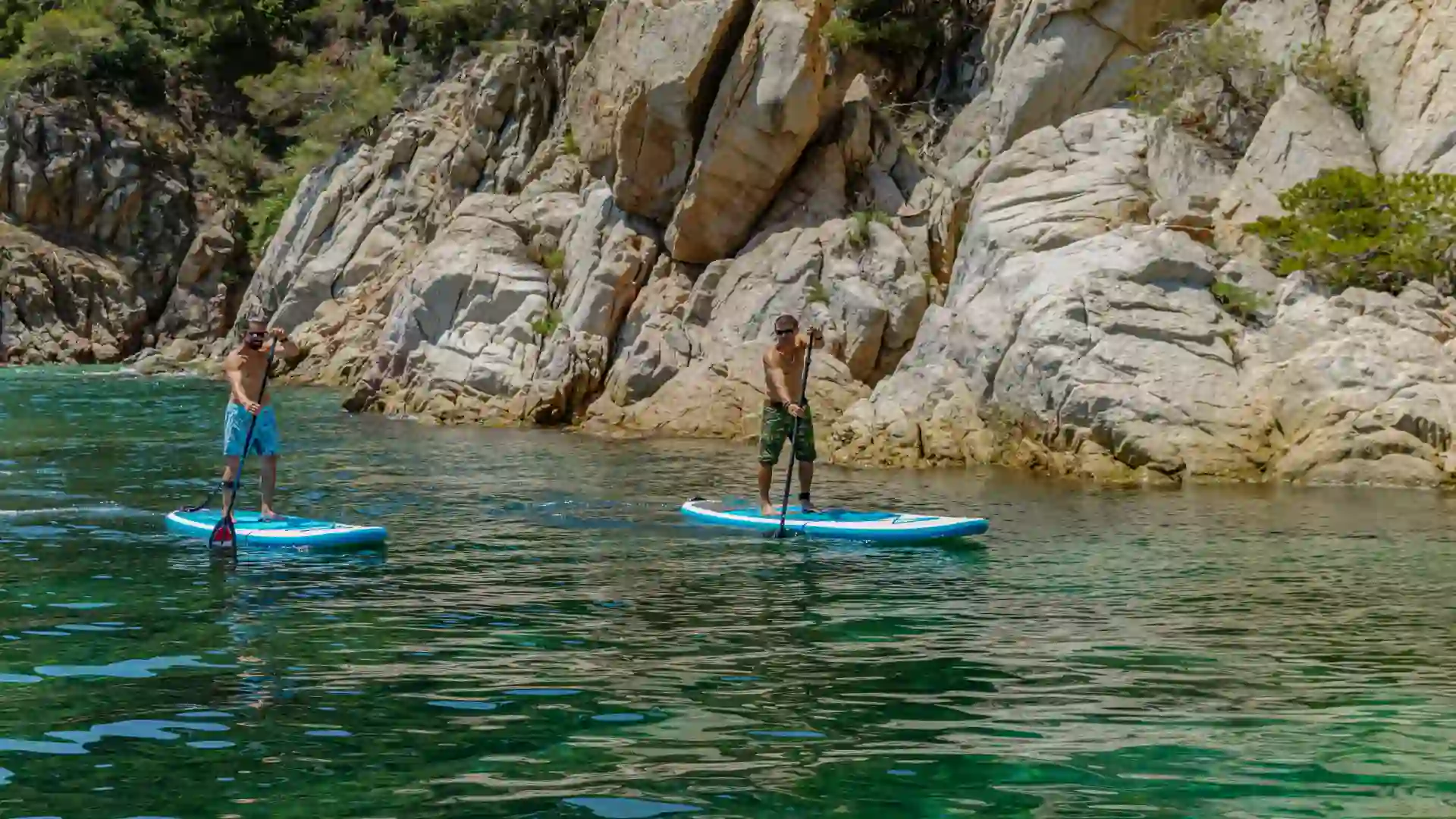
Discuss quiet alternatives to Illetes It doesn't mean looking for a lesser version. It means experiencing Formentera more closely. The island has a very particular scale: its character changes within just a few miles, and on a single morning it can offer a bright and exposed northern coast, a gentler and more open southern coast, or small rocky inlets where the sea calms if the wind is favorable. Tranquility depends not only on the fame of a beach, but also on its orientation, the seabed, the maritime traffic, the time of day, and how you approach it.
Why Illetes is not always synonymous with calm
Ses Illetes has an extraordinary quality: shallow waters, light-colored sand, and a light that seems to lift the seabed to the surface. Official tourist information places it among Formentera's great icons and highlights its value for swimming and walks, especially due to its location within a protected natural area.
From a nautical perspective, this same configuration explains some of its intensity. The area is accessible, photogenic, close to La Savina, and easily recognizable even to first-time visitors to the island. On calm days, the north of Formentera is a hub of activity. Sometimes the visual beauty of the place coexists with a less-than-tranquil atmosphere.
The calm in Illetes is often fragile. It can appear early in the morning, when the sun is still low on the sand and the water has barely been cut by propellers. It can also return during quieter times, when the day lengthens and many boats have already turned towards Ibiza. However, those seeking lasting silence need to look beyond the picture-postcard scenery.
In Formentera, it's best to think like the skipper: not about names, but about shelter. A calm spot with an easterly wind can be uncomfortable with a westerly wind. A secluded cove can be unstable if the seabed changes quickly. A long beach may seem less intimate, but it distributes the presence of people and boats much more evenly.
Levante, the other side of Es Trucadors
The first natural alternative to Illetes is very close, although it has a different character. Llevant opens onto the eastern side of the Es Trucadors peninsula, within the same northern area of Formentera. The island's own tourist information describes it as a beach similar to Illetes, often chosen by those looking to avoid the larger crowds.
Llevant's waters aren't always calm. In fact, its easterly exposure makes it more susceptible to the easterly winds and somewhat rougher seas on certain days. But when the forecast is favorable, it offers a more expansive, less scenic, and therefore freer feel. The beach breathes differently. There's more horizon than a picture postcard, more long stretches of sand than coveted corners.
For those arriving by boat, Llevant requires careful observation of sea conditions before deciding on a stop. It's not enough to simply view it from land or rely on its proximity to Illetes. A moderate easterly wind can create short waves and make staying in the harbor uncomfortable. Conversely, with gentle breezes or favorable conditions, it can become one of the most beautiful spots. Less crowded beaches in Formentera within the most sought-after environment on the island.
Llevant's appeal lies in its understated elegance. It doesn't compete with Illetes in its dramatic flair; rather, it softens it. It allows you to stay on the northern coast of Formentera without venturing into the most photographed area. For many sailors, that difference alone is enough to completely change their perception of the day.
Cavall d'en Borràs, relative calm before the extreme north
Cavall d'en Borràs is located before the most famous stretch of Illetes beach, facing west and maintaining a direct connection with the Ses Salines landscape. It's a comfortable beach with clear waters and a more relaxed atmosphere at times, though it shouldn't be mistaken for an isolated spot.
Its main virtue lies in its balance. It doesn't have the remote feel of other areas of Formentera, but it can offer a quieter respite than Illetes when the main flow of people is concentrated towards the end of Es Trucadors. From the sea, it allows for easy observation of the seabed and a cautious approach, always respecting the designated areas and the presence of swimmers.
Here, nautical judgment becomes essential. Tranquility isn't guaranteed by the name of the place, but by the time of day and how you manage the space. An orderly anchorage, with sufficient distance, good holding ground, and attention to the borneo of the nearby boats, transforms a seemingly ordinary stop into a serene experience.
Cavall d'en Borràs works particularly well for those who value tranquility without the need for complete isolation. There's scenery, sunset light, and a very direct visual connection to Ibiza. It's a discreet, not secret, but often more welcoming alternative to the heart of Illetes.
Cala Saona, sheltered from the west and a different island rhythm
Cala Saona belongs to a different side of Formentera. We're no longer on the sandy northern peninsula, but in a more defined cove, nestled between low rock walls and facing west. Its enclosed shape gives it a more intimate feel, especially when the wind isn't blowing in.
It's not an unknown cove, nor does it pretend to be. Its beauty is undeniable, and its accessibility from land makes it popular. But compared to Illetes, the experience is different: less expanse, a greater sense of shelter, a more intimate scale, and a water color that blends sand, rock, and shade. The tranquility here comes not from vastness, but from its boundaries.
From a boat, Cala Saona calls for caution and respect. Space is limited, and when several boats are present, it's best to avoid the temptation to get too close. sandy bottomMaintaining distance from the coast and paying attention to the evolution of the breeze are basic gestures for the cove to maintain its balance.
Cala Saona is one of those quiet coves in Formentera When visited with sensitivity and at the right time, the light becomes warmer towards the end of the day, and the walls take on a distinctly Mediterranean, mineral tone. It doesn't have the almost unreal whiteness of Illetes, but it offers something that is invaluable on busy days: a sense of refuge.
Migjorn, calm spread over a long coast
Migjorn offers a different answer to the question of tranquility. It's not a specific cove, but rather a long stretch of coastline in southern Formentera. Official tourist information describes Migjorn as the island's southern coast, with a wide expanse of beaches, coves, rocky and sandy areas, and several distinct access points.
That length is its greatest advantage. Where Illetes concentrates, Migjorn disperses. Where the north condenses the iconic image of Formentera, the south offers a slower, less immediate experience, more dependent on the chosen section. There are open areas, small entrances, sectors with low rock, and spaces where swimming has a less choreographed rhythm.
From a nautical perspective, Migjorn should be approached with caution. Its southerly exposure can make it uncomfortable with a swell or winds from the same direction. On calm days, however, it offers very pleasant spots to stop, especially when seeking an experience less associated with the constant coming and going of boats.
The secret of Migjorn lies not in a single, precise spot, but in embracing its diversity. Some areas are better suited for swimming from the shore; others offer a more interesting approach from the sea, always with a sounder reading and respect for the environment. Posidonia and common sense regarding the distance from the shore. For those seeking calm anchorages near IlletesMigjorn is not exactly next door, but it is within a reasonable navigational logic around Formentera.
It's Caló and the Tramuntana coast
Es Caló introduces a different landscape: boatyards, rock, transparency, and a more ancient relationship with the sea. The Tramuntana coast of Formentera doesn't have the immediate gentleness of Illetes, but it possesses an austere elegance. Here, the water seems more mineral, and the coastline is characterized by less sand and more relief.
It's not always a comfortable area to stop by boat, because the exposure and the seabed require careful observation of the day. But with favorable conditions, some nearby stretches offer swimming with magnificent clarity and a less crowded feel. It's a kind of tranquility more contemplative than beachy.
In Es Caló, the goal isn't to find the perfect beach, but rather the atmosphere. Low-rise houses, fishermen's ramps, light-colored rock, and a human scale remind you that Formentera is more than just a catalog of white sand. The island is also about craftsmanship, patience, and adapting to the wind.
When the north wind is calm, the area can offer some very clean conditions. When it's not, it's best not to push it. Nautical serenity often begins with giving up on a desired spot and choosing the place the sea allows that day.
Spanner, protected beauty and conscious distance
Espalmador often comes up in conversations about peaceful spots near Illetes, but it deserves special mention. Its beauty is undeniable: light-colored sand, crystal-clear water, and a distinct island feel. It forms part of the protected area of Ses Salines, a park encompassing both land and a vast marine area between Ibiza and Formentera.
Precisely for this reason, it should not be treated as a mere alternative plan. Espalmador requires regulatory attention, environmental respect, and a responsible approach to anchoring. The presence of seagrass meadows, shallows, and sensitive areas necessitates proceeding with more caution than enthusiasm.
On calm days, the temptation to get too close is understandable. The water's clarity reduces the perception of depth, and everything seems simpler than it actually is. But a good skipper knows that the clear Mediterranean also demands humility: a constantly monitored depth sounder, sufficient distance, slow maneuvers, and zero improvisation over live bottoms.
Espalmador may be serene, but it's not a place to rush through. Its value lies in the right distance. To see it without intruding, to swim without disturbing, to remain without leaving a trace. That is, perhaps, the most elegant way to be in Formentera's most fragile spaces.
How to choose a quiet alternative depending on the wind
The question shouldn't just be which beach is less crowded, but which coast is better oriented. In Formentera, the difference between a memorable stop and an uncomfortable one can depend on a few degrees of wind, an unexpected gust, or a slight swell coming in from the less sheltered side.
With easterly winds, east-facing areas can become less comfortable, while some westerly stretches are more pleasant. With westerly winds, the opposite occurs: visually idyllic spots can become exposed. With southerly winds, Migjorn requires special attention. With northerly winds, the perception of the northern coast changes completely.
The time of day also matters. By mid-morning, many areas are still relatively quiet. As the day progresses, thermal breezes can intensify, boat traffic increases, and the most obvious anchorages fill up sooner. Tranquility, on such a coveted island, usually belongs to those who don't arrive late or sail in a hurry.
Another factor is the type of seabed. Sand offers better holding ground and less impact if anchored correctly. Rocks can complicate maneuvering. Posidonia seagrass should always be respected: it's not underwater scenery, but a living structure that maintains much of the clarity and health of the waters around Ibiza and Formentera.
Real questions before seeking calm near Illetes
Is Llevant always quieter than Illetes?
Not always. Llevant often experiences less pressure than Illetes at certain times, but it's more exposed to certain winds. It can be a great alternative with calm seas and a less comfortable option if a Levante wind or short swell picks up.
Is Cala Saona a good alternative for a relaxing day?
Yes, when conditions are right and it's not overcrowded. Its sheltered shape offers a more intimate feel than Illetes, although the available space requires greater attention to anchoring and the distance between boats.
Is Migjorn good for escaping the atmosphere of northern Formentera?
Migjorn allows you to completely change the rhythm of your day. Being a long and varied coastline, it distributes the number of visitors more evenly, but it should be avoided when the wind or swell is strong from the south.
Is a backrest a calming alternative or a sensitive area?
Both things can be true. Espalmador can convey a great sense of serenity, but it is part of a protected environment and requires a particularly careful approach. It should not be treated as a mere substitute for Illetes.
Does calm depend more on the place or the time?
It depends on both of them, although timing plays a big role. A well-known spot can be quiet early in the morning, and a secluded cove can lose its charm if the wind is bad or if there are too many boats nearby.
The Formentera that appears when you lower the volume
Seeking peaceful alternatives to Illetes is, fundamentally, about changing our perspective on Formentera: stop chasing only the perfect image and pay attention to the wind, the background, the silence between maneuvers and the way each coast breathes; in that unhurried reading, even an editorial reference about boat rental in Ibiza It belongs more to the nautical context of the journey than to an immediate decision, because true calm does not come from the name of a beach, but from arriving with discernment, staying with moderation and leaving without disturbing the light that made the place valuable.